Horizon 2050
Strategic Intervention Areas and Development Objectives of the Chã de Matias Association – Horizon 2050
The Chã de Matias Association's vision for 2050 is to build a more inclusive, just, safe, resilient, and sustainable community, promoting human development, protecting the rights of children and adolescents, empowering families, and creating opportunities for all.
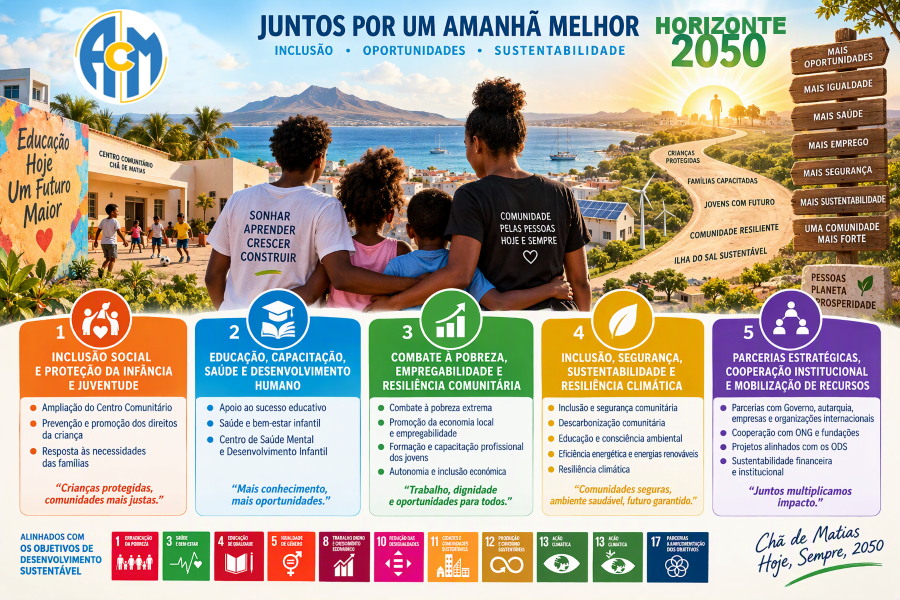
The main strategic areas of intervention and objectives projected until 2050 are structured as follows:
1. Social Inclusion and Protection of Children and Youth
This axis aims to strengthen social protection mechanisms, promote equal opportunities, and ensure adequate responses to the needs of children, adolescents, and families in vulnerable situations.
- Expansion of the Community Center: To expand the capacity for welcoming, monitoring, and providing daily support to children and adolescents at risk or in situations of social vulnerability within the community.
- Prevention and Promotion of Children's Rights: Strengthen partnerships with public and private entities and civil society organizations, promoting workshops, awareness campaigns and prevention initiatives, with a view to the comprehensive protection of the rights of children and adolescents.
- Responding to the Needs of Families: Developing new social responses and support infrastructure for single-parent families, working parents, and households with greater difficulties in reconciling work and family life, particularly on the island of Sal.
2. Education, Training, Health and Human Development
To promote educational success, the holistic development of children and young people, and access to specialized health services, psychological support, and skills training.
- Supporting Educational Success: Collaborating with the new dynamics of public policies in the field of education, through the implementation of extracurricular, artistic, cultural, technological and sporting activities, contributing to the development of personal, social and academic skills of children and young people.
- Child Health and Well-being: Maximizing the responsiveness of the Solidarity Child Health Clinic by bringing health services, psychological support, and emotional assistance closer to children and their families.
- Creation of the Mental Health and Child Development Center: To create a specialized multidisciplinary support structure for children with learning difficulties, special educational needs, dyslexia, dyscalculia, attention deficits, behavioral challenges, and difficulties related to emotional and cognitive development.
Areas of intervention of the Mental Health and Child Development Center
The Center should operate from a multidisciplinary perspective, integrating different specialties and therapeutic responses:
- Clinical Psychology: Assessment, monitoring, and intervention in the psychological, emotional, and behavioral development of children.
- Psychopedagogy: Identifying learning difficulties, providing cognitive stimulation, and developing strategies to optimize learning potential.
- Speech Therapy: Prevention, assessment and intervention in communication, language, speech, voice disorders and associated learning difficulties.
- Educational Psychology: Promoting academic success, assessing learning difficulties, and developing strategies for adapting to the educational context.
- Family Therapy: Promoting healthy family relationships, strengthening emotional bonds, and supporting families in managing conflicts and challenges in child development.
- Psychomotor Therapy: Development of motor, cognitive, emotional, and relational skills through activities that promote coordination, balance, body awareness, and psychomotor integration.
3. Combating Poverty, Employability and Community Resilience
This axis aims to contribute to the reduction of social inequalities, the strengthening of the economic autonomy of families, and the creation of sustainable employment and entrepreneurship opportunities.
- Combating Extreme Poverty: Acting as a local partner to Municipal Platforms and National Strategic Plans, contributing directly to the goals of poverty reduction, elimination of social vulnerabilities, and combating exclusion.
- Promoting the Local Economy and Employability: Encouraging the formalization of the community economy, supporting the creation and consolidation of small businesses, and promoting entrepreneurship initiatives and business mentoring.
- Training and Professional Development for Young People: Develop professional qualification programs, vocational guidance, and preparation for the job market through protocols and strategic partnerships with training institutions, namely Sal Academy.
- Autonomy and Economic Inclusion: Promoting income-generating opportunities, especially for women, young people, and vulnerable families, encouraging active participation in the local economy.
4. Inclusion, Security, Sustainability and Climate Resilience
To build a more inclusive, safe, resilient and environmentally sustainable community through community mobilization and the establishment of partnerships with the Central Government, municipal authorities, international organizations and the private sector.
- Inclusion and Community Safety: Promoting initiatives to prevent violence, strengthen social cohesion, enhance public spaces, and encourage active citizen participation in building a safer community.
- Community Decarbonization: Contributing to the reduction of greenhouse gas emissions through the promotion of sustainable practices, energy efficiency, the use of renewable energies, and environmental awareness.
- Environmental Education and Awareness: Develop environmental education programs aimed at children, young people, and families, encouraging the reduction, reuse, and recycling of waste, the protection of natural resources, and the adoption of environmentally responsible behaviors.
- Energy Efficiency and Renewable Energies: Encourage the implementation of clean energy solutions in community facilities and social infrastructure, contributing to the reduction of energy costs and carbon footprint.
- Climate Resilience: Promoting community-based actions for adaptation to climate change, sustainable water management, combating environmental degradation, and protecting local ecosystems.
- Partnerships for Sustainable Development: Establishing cooperation protocols with national and international institutions, mobilizing technical, financial, and human resources to achieve the sustainable development goals by 2050.
5. Strategic Partnerships, Institutional Cooperation and Resource Mobilization
Realizing the 2050 vision requires a strong capacity for institutional coordination, cooperation, and resource mobilization.
- Establish strategic partnerships with the Government, City Council, public institutions, private companies and international organizations.
- Strengthen cooperation with non-governmental organizations, foundations, and entities that fund social projects.
- To develop structuring projects aligned with the United Nations Sustainable Development Goals (SDGs) and national development strategies.
- To create mechanisms for financial and institutional sustainability that guarantee the continuity and expansion of the Association's social services.